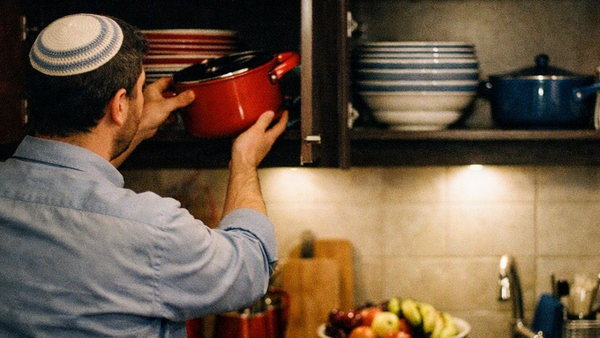
Kashrut: The Basics
Kosher is not a kind of food. It is a system of laws governing what may be eaten, how it must be prepared, and what may be combined.
Kashrut, judaica, and the practice of a Jewish life
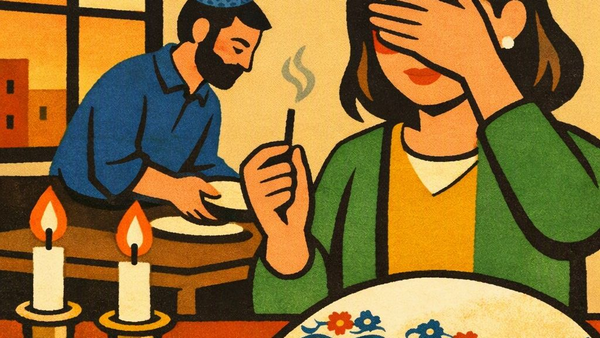
Shabbat at home—candles, kiddush, challah, a meal—is the gateway to Jewish life. Start small.
Continue reading →Kosher is not a kind of food. It is a system of laws governing what may be eaten, how it must be prepared, and what may be combined.

A small head covering worn as a constant reminder of Hashem above.

The fringed garment commanded in the third paragraph of the Shema—worn in prayer and (in the form of the tallit katan) all day.
Two leather boxes containing parchment scrolls of biblical passages, worn on the arm and head during weekday morning prayer.
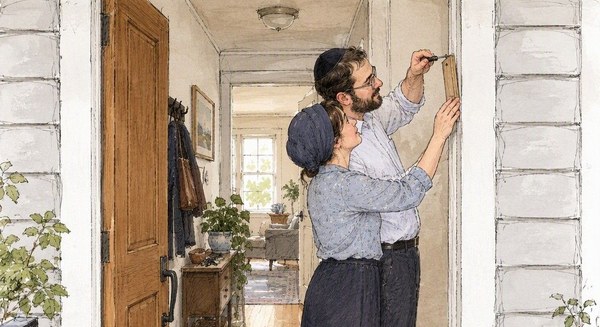
A parchment scroll of the Shema affixed to the doorpost, fulfilling the command to write God’s words “on the doorposts of your house.”
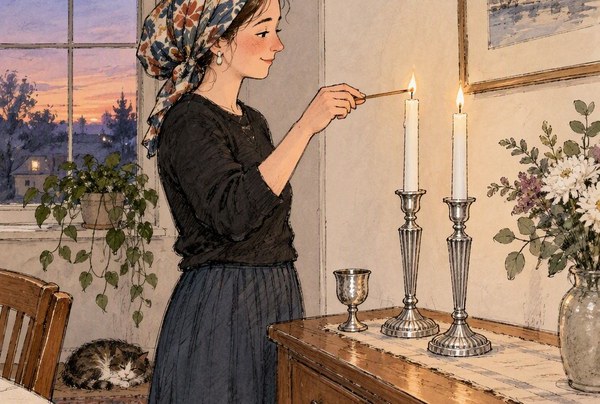
The two essential pieces of Shabbat judaica: candlesticks to welcome the day and a kiddush cup to sanctify it.
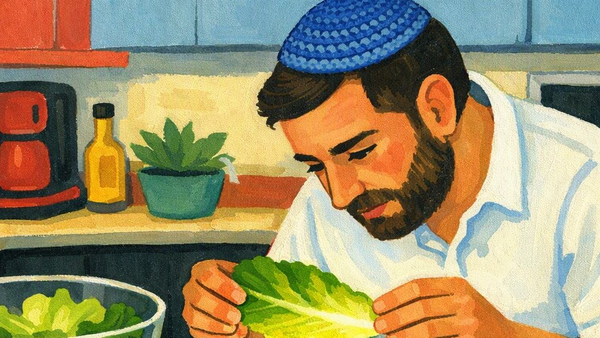
Halacha is the Jewish legal system—the way one walks. It is the operating language of observant Jewish life.

The Torah contains 613 commandments—248 positive and 365 negative. They are the operating program of a Jewish life.
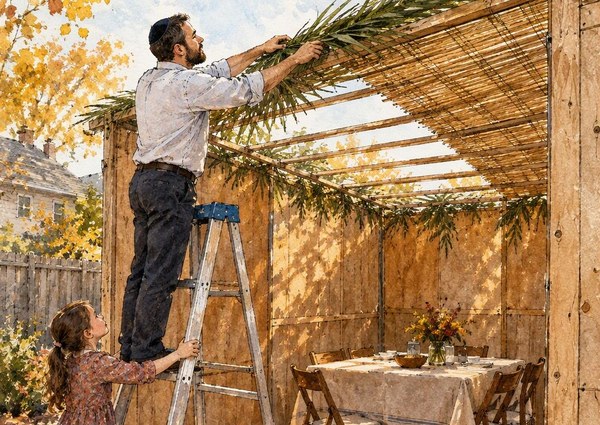
The temporary dwelling that is itself a mitzvah—a roof of stars under which the Jew dwells for seven days.
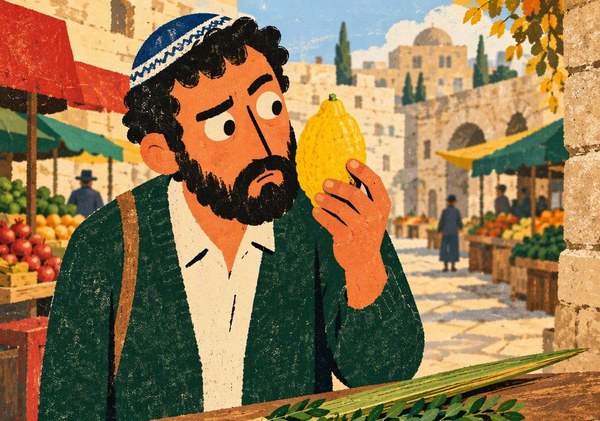
The lulav, hadasim, aravot, and etrog—the four species waved during Sukkot.
The nine-branched candelabrum lit on each of the eight nights of Hanukkah—one of the most distinctive pieces of Jewish judaica.
A response to a Christian article on the wool-linen prohibition—clarifying its halachic scope, the major rabbinic readings, and the importance of not casually dismissing ancient Jewish law.