
What Does Judaism Teach About God?
Judaism is the world’s founding monotheism. The nature of the One God is a question on which the tradition speaks in many voices.
God, peoplehood, the soul, and why

Jewish identity has both a Halachic definition and a wider self-understanding. The two do not always coincide.
Continue reading →Judaism is the world’s founding monotheism. The nature of the One God is a question on which the tradition speaks in many voices.

Shimon HaTzaddik: “The world stands on three things: Torah, Avodah (service of God), and acts of loving-kindness.”
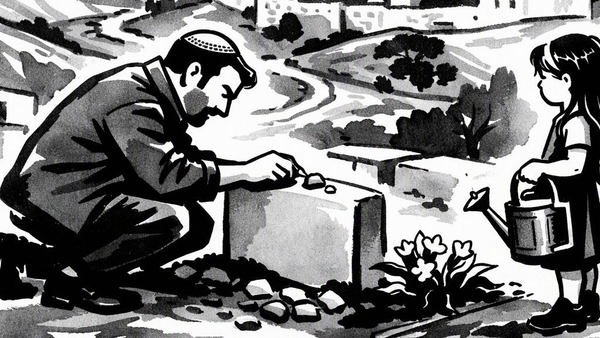
Yes—and the tradition speaks of the afterlife with restraint, multiplicity, and a strong focus on this life as primary.

Jesus does not match the Tanakh’s Messianic criteria and his divinity violates Jewish monotheism. The answer is that simple—and that careful.

The Jewish discipline of character refinement—old as the Talmud, formalized in the 19th century by Rabbi Yisrael Salanter.
“Repair of the world.” A term with a deep Kabbalistic origin and a wide contemporary application—both worth knowing.
The great 18th-century split that still shapes the contemporary Orthodox world.
The Jewish mystical tradition—the inner Torah, esoteric and beautiful, central since the 13th century.

Three classical answers—the rationalist, the kabbalist, and the Hasidic—and why each is illuminating.
Grace is a translation, with a Greek history. It does not exist in the Torah in its Christian conception. But "Jews don't believe in grace," is absolutely false. So in answering the question, "Where is grace in the Torah," we need a better answer than simply, "It doesn't."
On divine names, and the many careful ways Jews decline to write them.
What pronoun should we use for God? A meditation drawing on the Ba'al Shem Tov, Kabbalah, and Martin Buber.
The Editor's philosophical argument for existence, for others, and for a higher pattern—written for his children, accessible in the manner of a friendly conversation.
A meditation on the Jewish doctrine of teshuva, the Jewish Messianic expectation, and what Christianity inherited and what it altered.
A close reading of the New Testament's portrayal of the Pharisees and Scribes—and why that portrayal cannot be reconciled with what is known of the historical Sanhedrin.
The Arizal's teaching that Moshe Rabbeinu was the reincarnation of Noach—and how a leader's failure to pray for his generation was repaired centuries later at the foot of Sinai.
The prologue of the Editor's full treatise on gilgul neshamot—the rationalist and mystical traditions of soul-transmigration in Judaism, with detailed engagement of DovBer Pinson's contemporary synthesis.

A source-based exploration of rationalist and mystical accounts of the soul, reincarnation, and spiritual repair, with a close reading of DovBer Pinson’s Reincarnation and Judaism.