Rosh Hashanah
The Jewish New Year—the Day of Judgment, the head of the Ten Days of Repentance, and the day on which the shofar is sounded.
A Chapter on Every Yom Tov, Chag, and Fast Day
The Jewish New Year—the Day of Judgment, the head of the Ten Days of Repentance, and the day on which the shofar is sounded.
The Day of Atonement—the holiest day of the year, observed with a 25-hour fast, five services, and white garments.
You have decided to go to synagogue for the High Holidays. Good. Now comes a surprisingly complicated question: what goes in the bag?
Festival of Booths—seven days of dwelling in the sukkah and waving the four species, commemorating the Israelites' wandering.
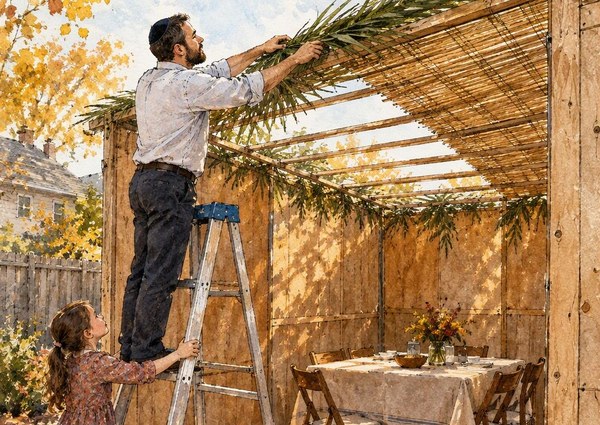
The temporary dwelling that is itself a mitzvah—a roof of stars under which the Jew dwells for seven days.
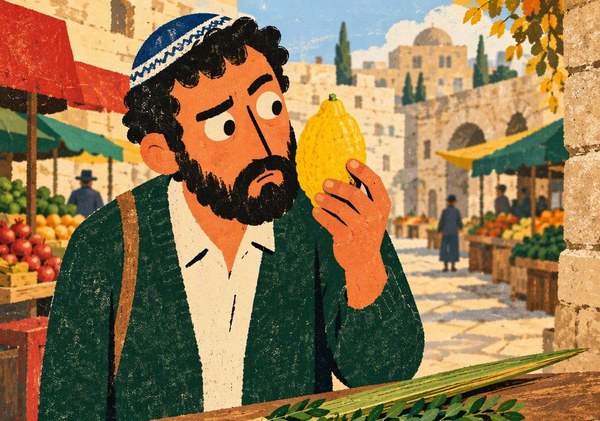
The lulav, hadasim, aravot, and etrog—the four species waved during Sukkot.
Passover—the Festival of Freedom, the foundational story of the Jewish people, and the seder that is the most widely observed Jewish ritual in the world.
The 49-day count from the second night of Pesach to the eve of Shavuot—a Torah commandment, a practical bridge, and a Kabbalistic discipline.
The Festival of the Giving of the Torah—fifty days after Pesach, the early summer pilgrimage festival.
The eighth-day festival following Sukkot—in Israel a single day, in the diaspora two—climaxing with the dance of Simchat Torah.
The eight-day winter festival commemorating the Maccabean victory and the miracle of the oil.
The nine-branched candelabrum lit on each of the eight nights of Hanukkah—one of the most distinctive pieces of Jewish judaica.
The festival of Esther—the joyful deliverance of Persian Jewry, observed with the Megillah, gifts to the poor, mishloach manot, and the seudat Purim.
The New Year of the Trees—a Mishnaic minor festival recovered with great enthusiasm in modern times.
The 33rd day of the Omer—the end of the spring period of mourning, observed with bonfires and visits to the grave of Rabbi Shimon bar Yochai in Meron.
Four daylight fast days frame the Jewish year with grief and remembrance.
The 9th of Av—the major fast day of the Jewish year, commemorating the destruction of both Temples and many other catastrophes.
Holocaust Remembrance Day: the 27th of Nisan, fixed by Knesset resolution in 1951 and given statutory form in 1959.
Israel's Memorial Day and Independence Day—observed back-to-back on the 4th and 5th of Iyar.
The 28th of Iyar—commemorating the reunification of Jerusalem in the Six-Day War of 1967.
The Jewish year has a clear shape. Knowing the shape makes every individual holiday more meaningful.
The five biblical scrolls read on five different occasions—most famously the Megillat Esther on Purim.